AC Heat Impact
Cooling saves lives — but inefficient cooling increases energy demand, emissions and urban heat.
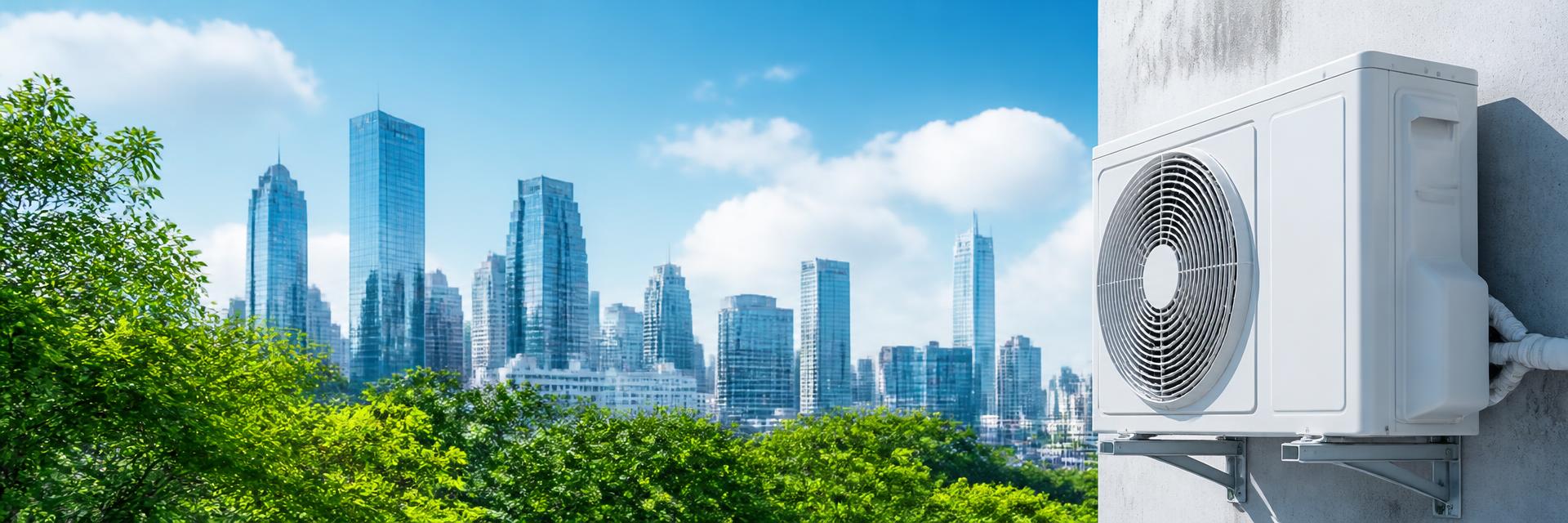
Cooler buildings. Healthier people. A cleaner planet.
Global Heat & Cooling Level
1.43°C
above 1850–1900
global mean surface
temperature (2025)
2015–2025
were the 11 warmest
years on record
(WMO)
+20%
cooling degree days
in 2024 vs 2000–2020
(IEA)
+6%
cooling degree days
in 2025 vs 2024
(still above long-term average)
(IEA)
A hotter planet means higher cooling needs.
Source: WMO (2025); IEA (2025–2026)
Global AC Situation
- Low
- Moderate
- High
- Very high
~200 million air conditioners shipped globally in 2024
(about 25% more than five years earlier).
Source: IEA (2025)
Cooling by Region
Indicative cooling pressure / access gap
- Asia
- North America
- Europe
- Africa
- Latin America
- Middle East
Shows relative cooling pressure and access gap, not exact figures.
Why Does It Happen?
Heat waves
and rising temperatures
More AC use
(heating becomes more common)
Peak electricity demand
(especially in hot periods)
Power generation emissions + outdoor heat rejection
(from ACs and buildings)
What Are the Impacts?
Human Health
Heat stress, respiratory issues, cardiovascular risks.
Energy & Grid
Higher electricity demand, strain on grids.
Climate & Emissions
More CO₂ from power generation and temperature effects.
Urban Heat
Hotter cities, more heat islands.
Access & Equity
Unequal access, highest risk for vulnerable communities.
Where Is It Worst?
Examples, not ranking

Delhi
(hot & dense)

Mumbai
(hot & humid)
Dhaka
(hot & dense)

Bangkok
(hot & humid)
Jakarta
(hot & humid)
Manila
(hot & humid)
Lagos
(hot & dense)

Phoenix
(hot & dry)
How Does It Affect Our Daily Life?
Hotter day
(especially heat waves)
AC on
(more usage)
Power peak
(higher demand)
Emissions + outdoor waste heat
(from ACs and buildings)
Energy & Economy
Cooling demand projected to grow by
~1,600 TWh
by 2035 (under current policies)
By 2035, income-driven AC use could add ~330 GW to global peak demand and higher temperatures another ~170 GW (≈ 500 GW combined).
Source: IEA (2025–2026)
Solutions
- Efficient inverter ACs
- Higher efficiency standards
- Smarter temperature setpoints
- Insulation and shading
- Fans + AC (combined use)
- Low-GWP refrigerants
- Renewables + storage
- District cooling
- Cool roofs and urban trees
Interesting Facts
200M
AC shipments
in 2024
+25%
more than five
years earlier
Nearly 20%
of buildings electricity
used by ACs and fans
230 Mt CO₂
from temperature effects in 2024
(~100 Mt China, 50 Mt India)
Source: IEA (2025–2026); WMO (2025)
Efficient cooling for a sustainable future
Community comments
Share your thoughts, experiences or ideas. Your comment will be visible to everyone.
- A
Aisha2 hours ago
We need more energy efficient ACs and green buildings. It really makes a difference!
- R
Rahul5 hours ago
Better cooling solutions should be accessible to everyone, especially in hot regions.
- D
Daniel1 day ago
This is a big issue, but also a big opportunity for clean energy and sustainable cities.